Most founders spend their time chasing unique angles, a distinctive brand voice, a product nobody else offers. The instinct makes sense. We've all know the message: differentiation wins.
What I've learned, after years of working with ecommerce brands at various stages, is differentiation is the wrong starting point. Clarity is.
Your customers need to understand what you sell, who it's for, and why it matters to them before they notice how you're different from anyone else. Get clarity wrong and differentiation becomes irrelevant. Get clarity right and differentiation often takes care of itself.
The Clarity Problem Nobody Talks About
Here's a pattern I've seen repeat across dozens of new brands. A founder launches with a strong product, solid website, compelling copy. Sounds good. Let’s run ads. Traffic trickles in. Conversion hovers at 1% or less.
The instinct is to keep tweaking things, fix the funnel. Test new ad creative. Redesign the product page. Add urgency. Offer a discount. What about another popup?
The real issue is often simpler. Visitors land on the site and don't immediately understand what the brand sells, who it's for, or why it even exists in the first place. They leave before any conversion tactic gets a chance to work.
I used to think this was a copywriting problem. It's not. It's a strategy problem. If the founder struggles to articulate their offer in one clear sentence, the website won't do it for them. No amount of design polish fixes a clarity gap.
Clarity as a System
But clarity isn't only a tight homepage headline. It's a property of the entire business system.
When we talk about clarity, we mean the alignment between what you offer, who you serve, and the experience you deliver across every touchpoint. Your product pages, your email sequences, your packaging, your customer service responses. They all need to tell the same coherent story.
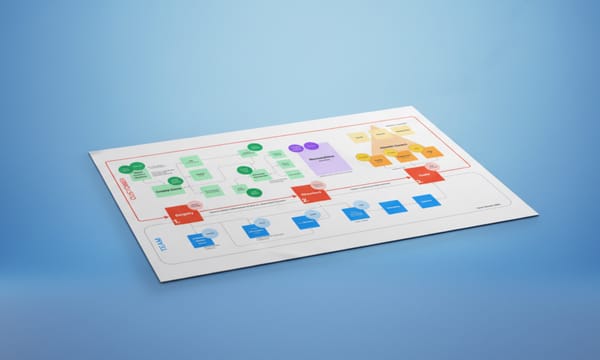
This is where systems thinking applies. Brand positioning, customer definition, product offers, and customer experience are interconnected. A change in one area ripples through the others. When these areas align around a clear proposition, customers feel it. When they don't align, customers sense the confusion even if they struggle to name it.
Think about the last time you visited a website and immediately understood what was being offered and whether it was for you. The feeling of instant recognition is clarity working as a system. Every element reinforced the same message.
What Customers Do When They're Confused
Research on decision-making tells us something useful here. When people face uncertainty, they default to inaction. The cognitive cost of figuring out whether something is right for them is often higher than the motivation to buy.
Let me say that again: The cognitive cost of figuring out whether something is right for them is often higher than the motivation to buy.
Your visitors are making a rapid assessment. Within seconds, they're processing whether this product solves their problem, whether this brand is for someone like them, and whether the price feels reasonable for the value they perceive. If any of those questions takes effort to answer, the default response is to leave.
This is rarely a failure of your product. It's usually a failure of communication. The product might be exactly what they need. If the path from landing to understanding requires work, most people won't do it.
We lose customers to confusion far more often than we lose them to competitors.
How to Build Clarity Into Your Brand
The starting point is talking to your customers. Not surveying them. Talking to them. Phone calls. Video chats. In-person conversations if you have the chance. You're listening for the words they use to describe their problem and your product. Those words become your messaging.
In my experience, founders who regularly spend time in answering customer service enquiries and having real conversations with customers learn more about their positioning than those who spend months on brand strategy decks. The language your customers use is the language your website should speak.
From there, the work is alignment. Take what you've learned and run it through every customer touchpoint. Does your homepage communicate the same value your customers described? Do your product descriptions address the problems they mentioned? Does your email welcome sequence reinforce why they bought?
This sounds straightforward. In practice, it requires discipline. We're drawn to clever copy, aspirational branding, and creative campaigns. Clarity often feels boring by comparison. It's not. It's the foundation everything else builds on.
Differentiation Follows Clarity
Here's what I've observed, though I want to be honest here: this is pattern recognition rather than proven theory. Brands achieving deep clarity about who they serve and what they offer often find differentiation emerges naturally.
When you understand your specific customer's specific problem with genuine depth, your approach to solving it becomes distinctive. You stop trying to be different and start being precise. Precision, applied consistently, looks like differentiation from the outside.
This might not hold true for every business. Commoditised markets with identical products face a different challenge. But for most DTC brands selling products with any degree of uniqueness, clarity about the customer and the problem creates a positioning competitors struggle to copy.
The brands I've worked with who grew sustainably didn't start by asking how to stand out. They started by asking who they serve and what these people need. The standing out happened as a consequence.
Where to Start This Week
If this resonates, here's a practical starting point. Write down, in one sentence, what your business offers and who it's for. Show it to five people who've never visited your website. Ask them to tell you what they think you sell.
If their answers match your intention, your clarity is strong. Build on it. If their answers vary or miss the mark, you have your signal. The work isn't to differentiate harder. It's to communicate clearer.
The businesses that grow are the ones customers understand. Everything else follows from there.